10 Online eCommerce Business Ideas You Can Start in South Africa
The growth of online shopping has created new opportunities for South African entrepreneurs.
You don’t necessarily need a large shop, expensive premises or a huge warehouse to start an online business. Depending on the business model, you can begin with a focused product range and expand as your customer base grows.
The biggest challenge is often deciding what to sell.
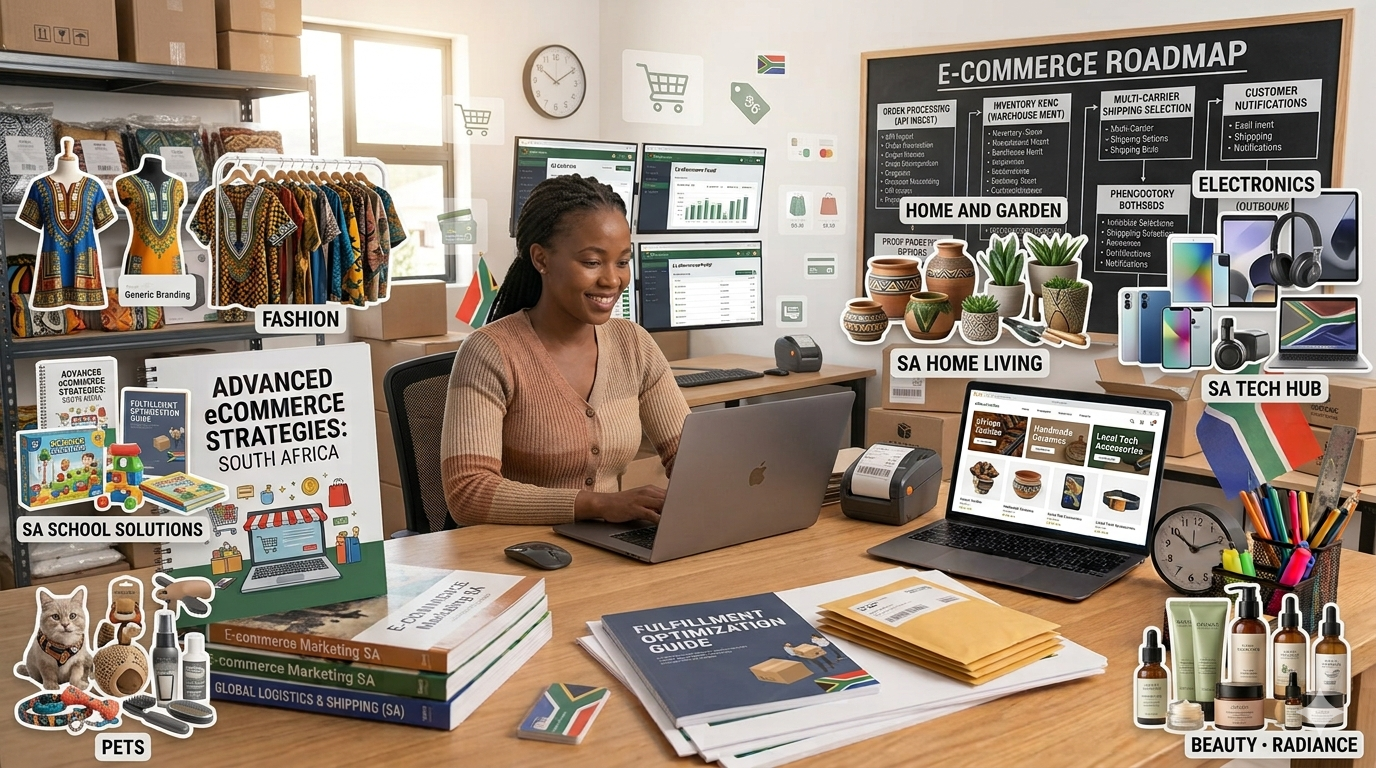
If you’re interested in starting an online eCommerce business, here are 10 ideas worth exploring.
1. Fashion and Clothing
Fashion is one of the most recognisable eCommerce categories.
You could specialise in:
- Women’s clothing
- Men’s clothing
- Children’s clothing
- Activewear
- Workwear
- Accessories
- Shoes
- Bags
- Jewellery
Rather than trying to compete with massive retailers on everything, consider focusing on a specific customer or style.
For example, a store could specialise in affordable activewear for women or locally inspired fashion accessories.
2. Home and Garden Products
South Africans spend considerable time improving their homes and outdoor spaces.
An online store could sell:
- Garden equipment
- Décor
- Lighting
- Storage products
- Kitchen accessories
- Outdoor products
- Furniture
- DIY products
- Home organisation products
This category also provides excellent opportunities for content marketing.
Articles such as “10 Easy Ways to Improve Your Outdoor Space” can attract people who may eventually become customers.
3. Technology Accessories
You don’t necessarily need to sell expensive computers and televisions to enter the technology market.
A specialised store could focus on accessories such as:
- Phone accessories
- Laptop accessories
- Cables
- Chargers
- Computer peripherals
- Storage devices
- Desk accessories
- Gaming accessories
The technology market changes quickly, so product selection and supplier reliability are particularly important.
4. Beauty and Personal Care
Beauty products can work well online because customers frequently research products before purchasing them.
Possible niches include:
- Skincare
- Haircare
- Beauty accessories
- Personal grooming
- Cosmetic tools
- Natural personal-care products
Trust is especially important in this category.
Use accurate product information and avoid making unsupported medical or health claims.
5. Pet Products
South Africa has millions of households with pets, creating opportunities for specialised online stores.
You could sell:
- Pet beds
- Toys
- Collars and leads
- Feeding accessories
- Grooming products
- Training products
- Travel accessories
A pet store can also build a strong content strategy around pet care, training and useful tips.
6. Fitness and Sports Products
Health and fitness is another broad eCommerce category.
Possible products include:
- Exercise equipment
- Yoga accessories
- Sports accessories
- Training equipment
- Gym bags
- Fitness clothing
- Recovery accessories
A niche approach can make the business easier to market.
For example, instead of trying to sell equipment for every sport, you could focus on home fitness or a specific sporting community.
7. Baby and Children’s Products
Parents are constantly looking for useful products for babies and children.
An online store could specialise in:
- Baby accessories
- Children’s clothing
- Educational toys
- School products
- Nursery products
- Children’s furniture
- Activity products
Parents tend to value safety, quality and reliability, so product descriptions and supplier selection are particularly important.
8. Educational Products
Education provides interesting opportunities for online entrepreneurs.
You could sell:
- Educational toys
- Books
- Learning resources
- Stationery
- Educational games
- Digital learning products
- Online courses
- Study materials
This category can be especially attractive if you have knowledge of a particular subject or educational market.
9. Hobby and Special-Interest Products
Some of the best eCommerce opportunities can be found in specialised communities.
Consider hobbies such as:
- Photography
- Fishing
- Crafting
- Gaming
- Gardening
- Collecting
- DIY
- Art
- Music
- Outdoor activities
Passionate customers often spend considerable time researching products and looking for specialised suppliers.
A focused online store can become a valuable resource for a particular community.
10. Digital Products
Not every eCommerce product needs to be shipped in a box.
Digital products can include:
- Online courses
- Templates
- Ebooks
- Graphics
- Digital planners
- Educational resources
- Business documents
- Software
- Membership content
One major advantage is that digital products can potentially be sold repeatedly without the physical inventory and delivery requirements associated with traditional products.
However, the product still needs to provide genuine value.
How Do You Choose the Right eCommerce Idea?
Having an idea is only the beginning.
Before launching, investigate whether there is a viable market.
Ask:
Who is the customer?
What problem does the product solve?
How much are customers willing to pay?
Who are the competitors?
Where will I source the products?
What will delivery cost?
What will my profit margin be?
How will I attract customers?
These questions can help turn an interesting idea into a realistic business opportunity.
Look for Problems, Not Just Products
A powerful way to identify opportunities is to look for problems.
Instead of asking:
“What product can I sell?”
Ask:
“What problem can I solve?”
For example, customers may struggle to find affordable products within a particular niche, reliable delivery, useful product information or convenient local support.
An online store that solves a genuine customer problem has a stronger foundation than one created simply because a product is trending.
Research Your Competition
Competition isn’t necessarily a bad thing.
If other businesses are successfully selling a product, it can indicate that customers already exist.
Study your competitors.
Look at:
- Their prices
- Product ranges
- Website design
- Delivery options
- Customer reviews
- Social media
- Advertising
- Customer complaints
Then ask:
“What could I do better?”
Your advantage could be better service, clearer information, faster communication, a more specialised range or a better customer experience.
Calculate Your Numbers Before Launching
Never assume that sales automatically equal profit.
Consider all your costs:
Product cost + payment fees + delivery + packaging + advertising + website costs + other expenses = total cost
Then compare this with your selling price.
For example:
If a product costs you R200 and you sell it for R399, the R199 difference isn’t necessarily your final profit.
Other expenses still need to be deducted.
Understanding your numbers before launch can help you choose products with realistic margins.
Start With a Focused Product Range
You don’t need hundreds or thousands of products on day one.
Start with products that you understand and believe have potential.
Once you begin receiving real customer data, you can expand your range based on demand.
This approach can reduce unnecessary spending and make your store easier to manage.
Your Website Is Only the Beginning
Launching a website doesn’t automatically generate sales.
Customers need to discover your business.
Your marketing strategy could include:
- Search engine optimisation
- Social media
- Email marketing
- WhatsApp marketing
- Content marketing
- Influencer partnerships
- Paid advertising
- Customer referrals
Different products require different marketing strategies.
Test your approach and measure the results.
Final Thoughts
There are many potential eCommerce opportunities in South Africa, from fashion and technology to education, hobbies, home products and digital goods.
But don’t choose a business idea simply because someone claims it is a “hot product.”
Research the market.
Understand your customer.
Find reliable suppliers.
Calculate your margins.
Build a trustworthy online store.
Then market consistently and learn from your customers.
The most successful eCommerce businesses aren’t necessarily the ones selling the most products.
They are often the businesses that understand their customers best and consistently provide them with something valuable.
Our-School is helping aspiring entrepreneurs learn about eCommerce, online business, digital marketing and the practical skills required to participate in the modern digital economy.

You may also like